

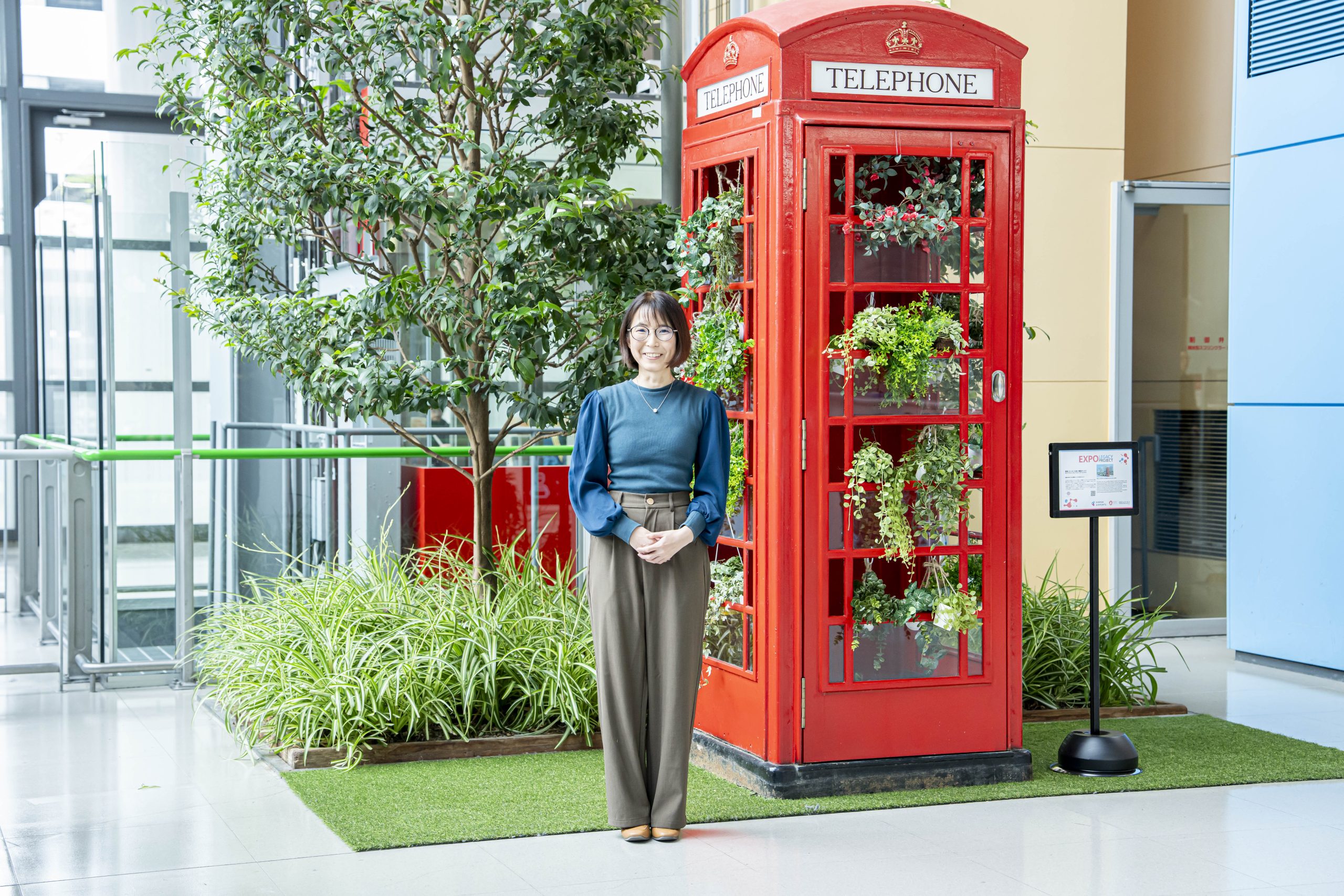
The airport is often thought to be a place that only provides people with transportation. However, Kansai airport defines airports as an ‘entrance of culture and experience’ as well.
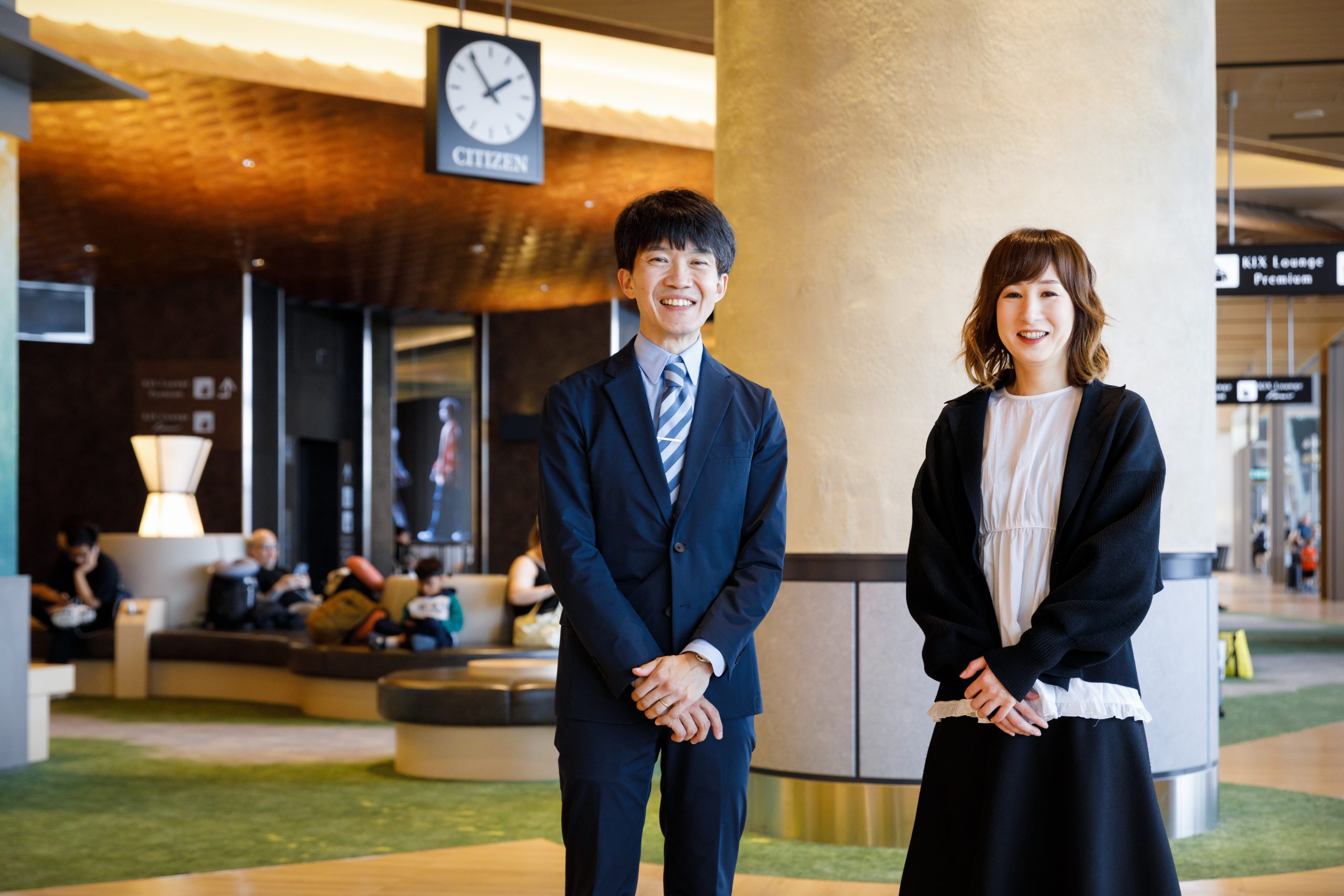
Send the memories of the Expo for the next experiences – this attempt is not a sequel of the Expo, but a new role for the airport. We asked Ms. A.N, who was in charge of the project, about behind the scenes of the project.
For more details on the legacy exhibits and their locations, please visit the “Expo Legacy Project” page.
-

A.N
Assigned to the Group Communication Department, Management Division, Kansai Airports. After joining the company, dealt with recruiting new graduates, promotion of airport use, airport services, construction contracts, etc. Has been in charge of promotions of Terminal 1 renovation and public relations since 2023.
Entrance for visitors to Expo 2025 Osaka, Kansai – the role of First Pavillion
2025 World Expo (hereafter the Expo) was held in April through October 2025. The three main airports in Kansai were deeply involved in it as the entrances of it, that accepted domestic and international visitors to this Osaka Kansai Expo. Is there anything memorable for you about the Expo?
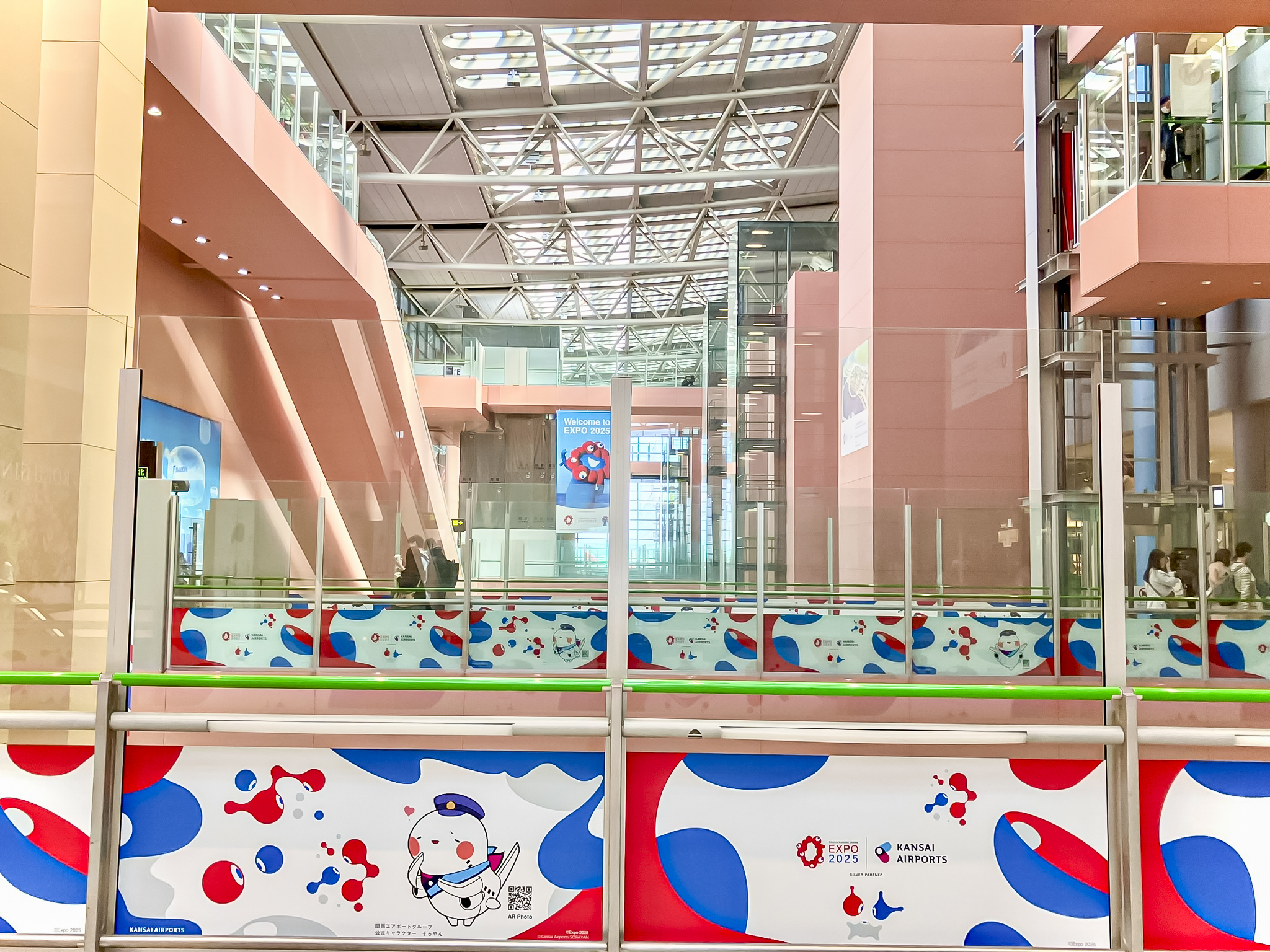
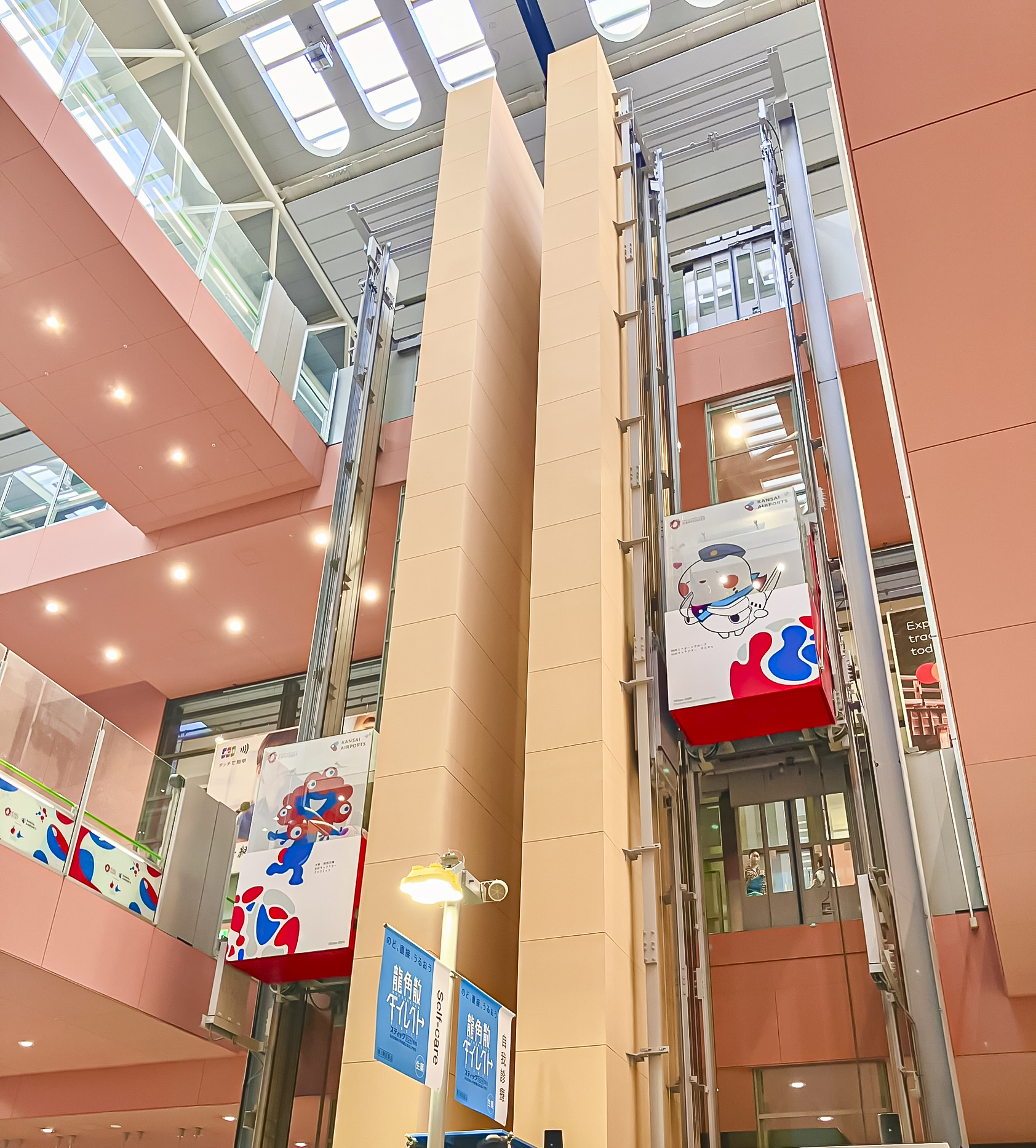
We defined the airports as a First Pavilion, and put effort in decorations, aiming to make them for visitors to the Expo the first experience and to contribute to ‘creating momentum’, that enhances expectations and excitement about the Expo.
We decorated the airports with logos and the official mascot, MYAKU-MYAKU, to have both hospitality of ‘Welcome to Japan’ and the special feelings of the Expo. The reactions were initially quiet, but more people started to take pictures and to post on social media. It was interesting to see the changes in social reactions at the airport.
During the Expo, we worked with many people from the Japan Association for the 2025 World Exposition, local communities and airports. We are incredibly happy that the Expo was a success.

What changes did it make to define airports as First Pavillion?
It strengthened the awareness that the airports are not only places for transits, but also ‘the entrance of the Expo Experience, and the whole company was able to work on the project. As secretariat of the internal communication team, I worked on decorations, as well as collaboration projects of Sorayan, the official mascot of Kansai airports and MYAKU-MYAKU. We collaborated with other departments and the whole company was working on preparation.
Was there any major challenge for the airport during preparation for the Expo?
Aside from momentum creation that we worked on, a communication team was established for operation sides. The team worked on securities and securing flows to accept guests from various countries including VIPs, for six months in collaboration with other parties involved. We are all relieved that we were able to conclude the period for the airport as entrances safe and without any major troubles.
Memories of the Expo in public spaces. Creativity of Legacy Project at airports.
World Expo Legacy Project will be implemented at Kansai airport, Itami airport and Kobe airport after the Expo. What led this project to be planned?
As the Expo approached to the end, we started to think ‘how to hand over these experiences and memories’. While Japan Association for the 2025 World Exposition expressed its policy to reuse facilities and equipment, we internally had suggestion to ‘keep something in the airport’ as well.
Then we started to collaborate with foreign pavilions to look for items that can be donated, with support from partner companies.

What do you think was the reason that airports were chosen as exhibition spots when many companies were working on Expo Legacy Project?
Many pavilions were happy to have their exhibitions at the EXPO not wasted and continuously utilized at airports, where domestic and foreign people come and go. I think it is an important point that the items can be seen by many people at public spots.
Additionally, it was the strength of Kansai Airports that it can make suggestions customized for groups of visitors, with three airports that have different characteristics. As a result, items from foreign pavilions are exhibited at Kansai International airport, and ones from domestic pavilions are at Osaka Itami airport and Kobe airport.
Are there any specific criteria you focused on, to decide what to exhibit at the airports?
It is ‘charm as arts’ and ‘eases to understand’. Specifically for items from foreign pavilions, we thought it was important that it was easy to tell what county those items were from. We are hoping that people who do not know the Expo would be able to enjoy it as well, if the items are intuitively understandable and eye-catching, like red telephone box from England or Koalas from Australia.
-300x225.jpg)
Was there anything difficult on the other hand?
It was the most difficult to decide ‘where to place the items’. We wanted many people to see the items, but spots were limited and the weight, size and stability of items varied. It was also frustrating that the more people pass, the more difficult it was to place items there. Another thing was that it was difficult to decide the best solution among many opinions, with much attention paid internally.
Specifically at Kansai International airport with many foreign visitors, we tried to place items in intuitive manners, so that people would be interested that ‘Osaka had the Expo’ with eye-catching exhibitions, assuming they do not know about the Expo.
For the airport to be a place open to the community with unexpected meetings
Was there anything intended for local people in this Expo Legacy Project?
This Legacy Project is implemented not as entertainment, but as a new charms of the airports. Considering the exhibition spots, we decided to place some items at spots where people who do not use airplanes could go as well. For example, we are using the observation deck of Osaka Itami airport.
I saw posts on social media like ‘I am happy that items from the Expo are where I live’. I hope that people will feel glad to be close to the airports through the exhibitions of Legacy Project.
What meaning do you think it has to exhibit Legacy at airports after the Expo is finished?
Airports have a role to show local charms and hand them over to the next destinations, as entrances of Japan or Kansai. We would like to maintain this role after the Expo with this exhibition, as the spots that saw beginning and end of the Expo.
What change do you think airports in the future could have with this project?
I feel that airports will be places where you can have new experiences and discoveries, places where you can ‘unexpectedly meet interesting things’, not only for transits. During the Expo, I heard people involved in pavilions of various countries say ‘I had only been to Tokyo in Japan before and this was the first time in Osaka, and I was able to know new attractive parts’.
I am hoping that more people will use the airports for travels, with interests in the world and Kansai region that were enhanced with Osaka Kansai World Expo. We, as airports, would like to continue activities for people to know these charms of the region.

Share this article




Related Articles

Behind our efforts to aim for greater heights and shape the future are great efforts and wishes of a lot of people supporting the airports.
In “Fly High,” we show you the passion and future vision of people involved with the airports with diverse stories of people working at the airports, those who grew up with the airports, those who love airplanes.