
Mechanism of Settlement Generation
The clay contains more water than expected, with alluvial clay having about 70% of its volume as water and diluvial clay containing approximately 40% water. The weight of the reclaimed soil squeezes water out of this clay layer on the seafloor, causing subsidence. This is the same principle as the phenomenon where the volume of a sponge decreases when pressed while it contains water. The weight of the airport island pushes water out of the clay, which causes the ground to sink.
Clay has the property of being impermeable to water, so this subsidence phenomenon takes a long period of time, ranging from several decades to hundreds of years. This process is called "consolidation," during which the clay gradually becomes firmer as water is expelled, eventually reaching a point where it can support the weight of the island, and the subsidence stops.
Additionally, along with the subsidence of the seabed, the fill material itself is compressed under its own weight, causing the total amount of subsidence at the surface of the airport island to result from the combined effects of both.
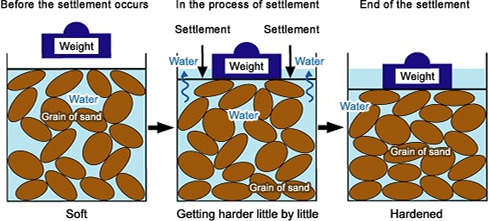
How the clay settles down
Weight of the Airport Island and Its Effect on the Ground
Clay becomes hard like cement over a long period of time. Since diluvial deposits are ancient and compacted, significant subsidence does not occur under the weight of typical coastal reclamation soil. However, due to the deep offshore reclamation required for the airport island, a large amount of fill material was needed, making it heavy, and it was anticipated that subsidence would exceed the hardness of the diluvial clay. For more information, see the graph in "Weight and Sinking of the Airport Island."
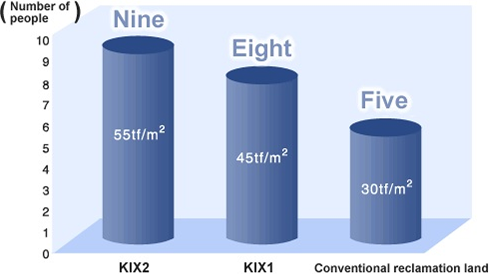
Weight Comparison of Reclamation Lands