

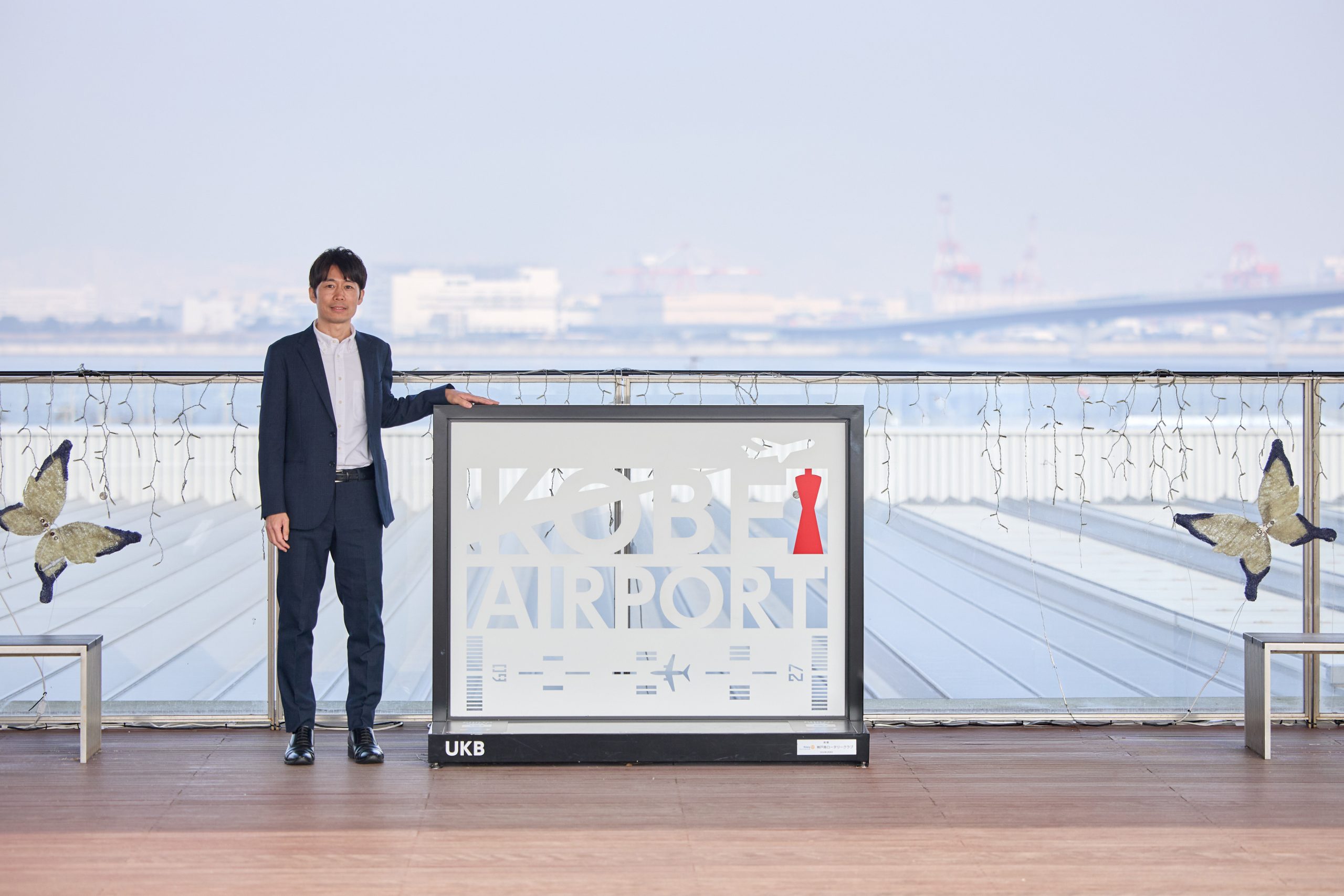
It has been 20 years since Kobe Airport opened in February 2006.
Kobe Airport is close to people’s lives just like Kansai International Airport and Osaka Itami Airport, located near the city center. How did the airport expand its role through changes in its operations and new initiatives?
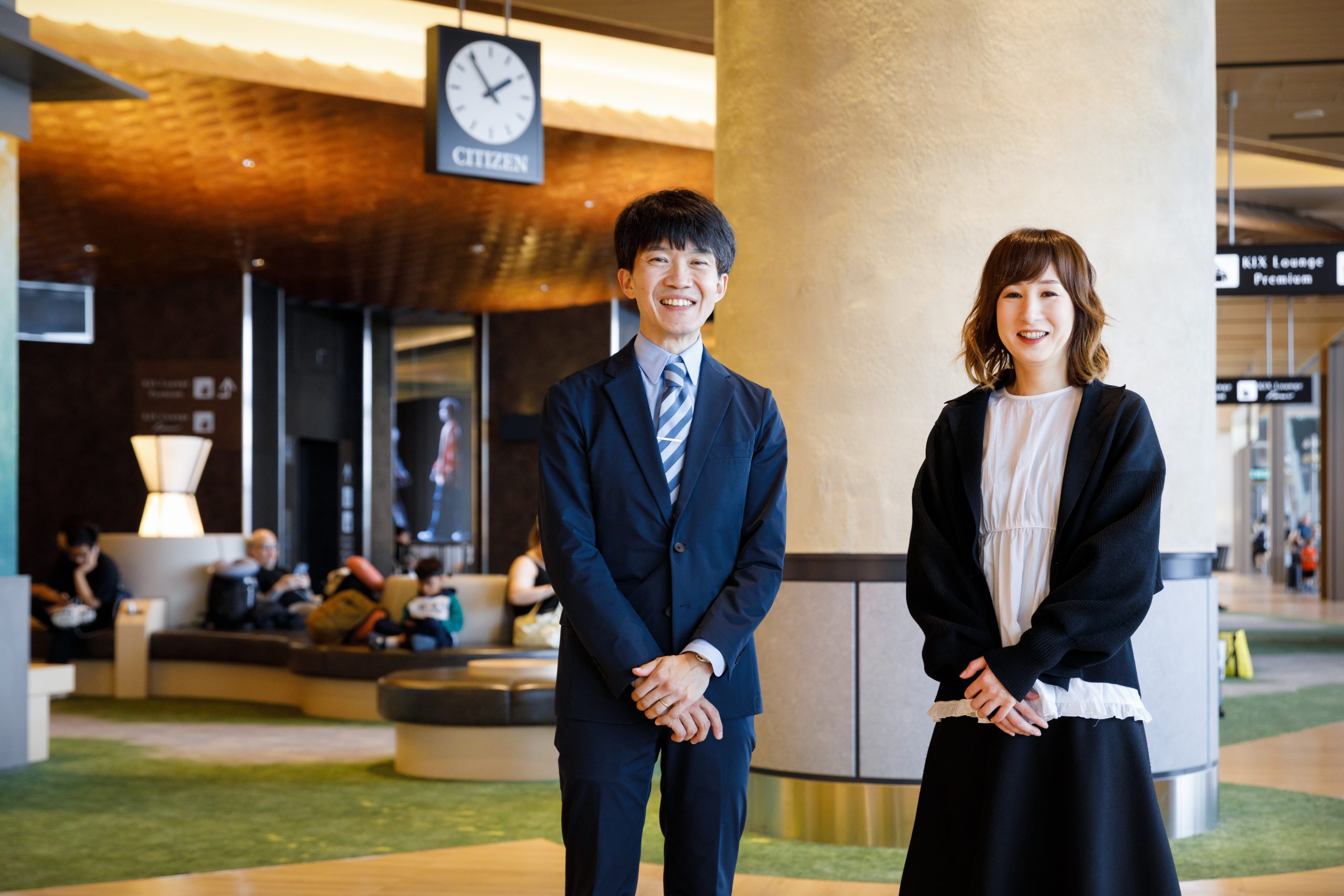
We interviewed ‘Mr. W’, who is involved in airport operations and interactions with communities, about the history and future of the airport.
-
W.N
Assigned to Sales and Public Relations, Kobe Operational Department, Kansai Airports. After assignments at General Affairs Department and Operation Department, started working at Kobe Airport in 2018. Takes charge in interactions with communities such as organizing tours and site visits, events, public relations and site promotions.
20 years with the communities after taking over from Kobe City
―― Please tell us about history of Kobe Airport, with its 20th anniversary in 2026.
Kobe Airport started its operation on February 16, 2006, as a main airport in Kansai following Osaka Itami Airport and Kansai International Airport. It was initially operated by Kobe City, but Kansai Airport Group took over since 2018.
―― Were there any changes after Kansai Airport Group took over the operation?
We still have the approaches that focus on eases of use for citizens and are open to the community, which Kobe City made efforts for. On top of that, we have been operating the airport with our knowledge that we acquired from operations of Kansai International Airport and Osaka Itami Airport.
Currently, there are ten domestic and international airlines at the airport. The size is not huge, but I think the airport has expanded its role little by little, with close relationships with the city and people of Kobe.
―― Please tell us about tasks you are in charge of.
I have been working at Kobe Airport since 2018. Currently, I am in the Sales and Public group and am in charge of various tasks that are related to public relations of the airport, such as tours and events at airport.

―― What do you think makes Kobe Airport unique?
I think it is that workers can communicate with each other easily beyond the companies they work for, with the compact size of Kobe Airport.
For example, many companies join cleaning activities organized by the airport operating company, and we have some activities organized by ANA at Kobe Airport, such as jump rope events.
――Is there anything about the facility that reminds you of Kobe?
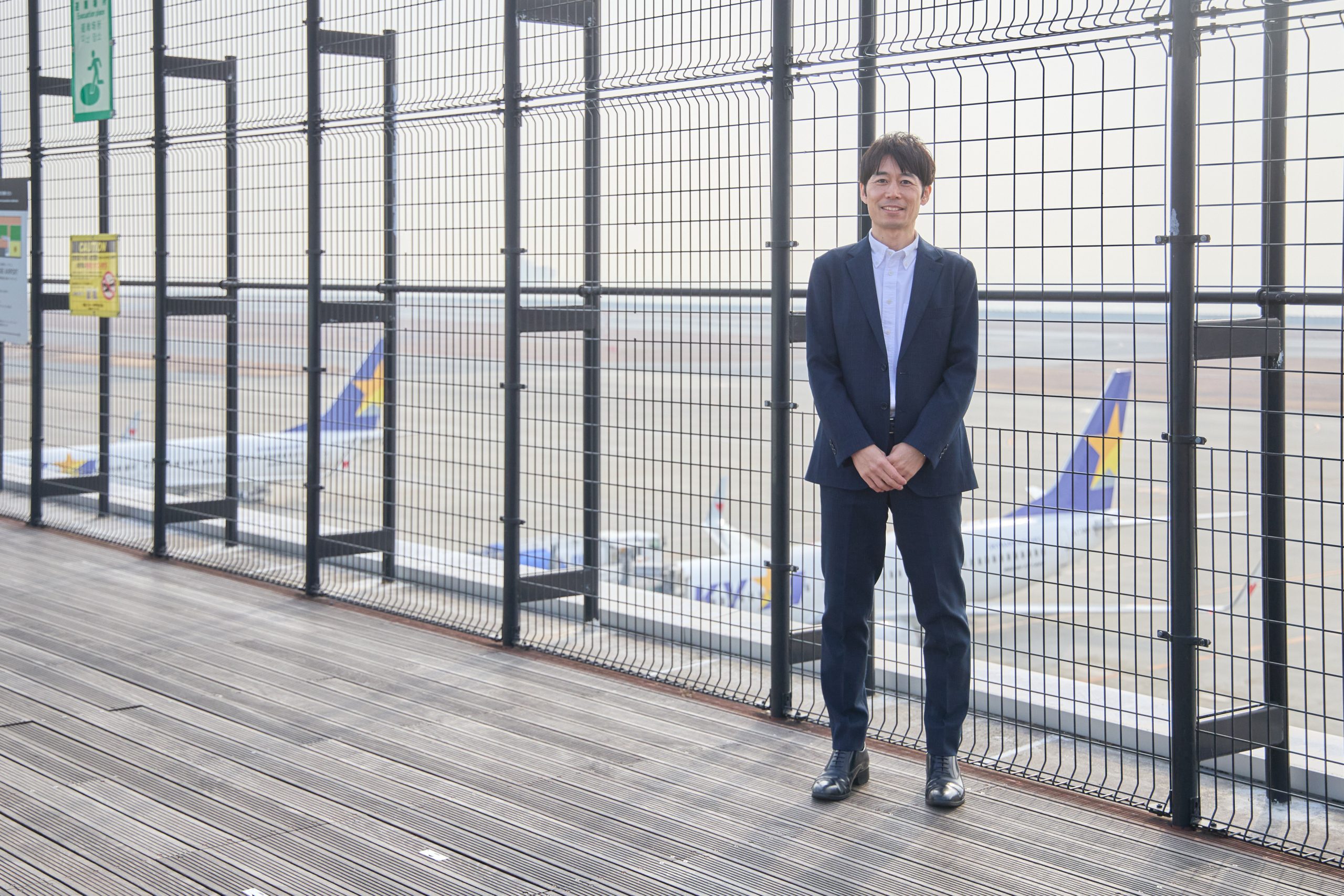
The very attractive thing is that you can see sceneries that are unique to Kobe as a port town, such as boats at anchor around the airport. Particularly at the observation deck on the rooftop of Terminal 1, you can see not only airplanes taking off and landing, but also the whole city of Kobe.
――Are there any facilities popular among visitors?
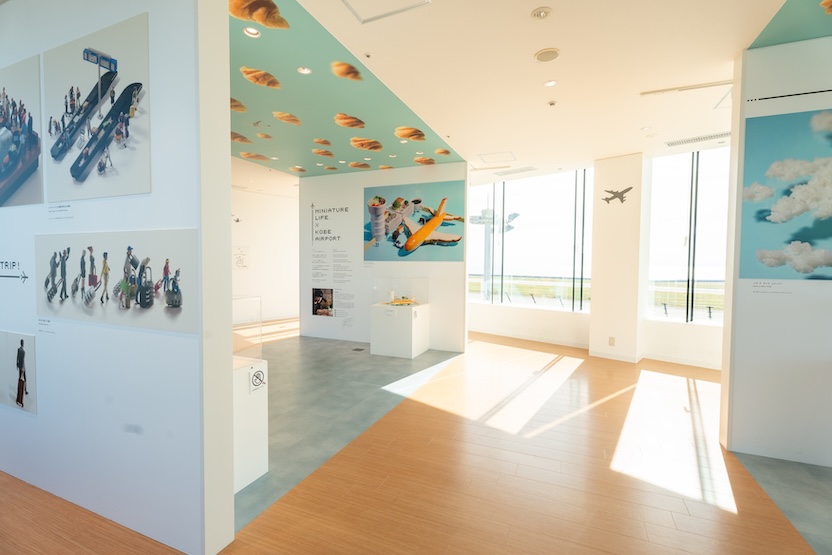
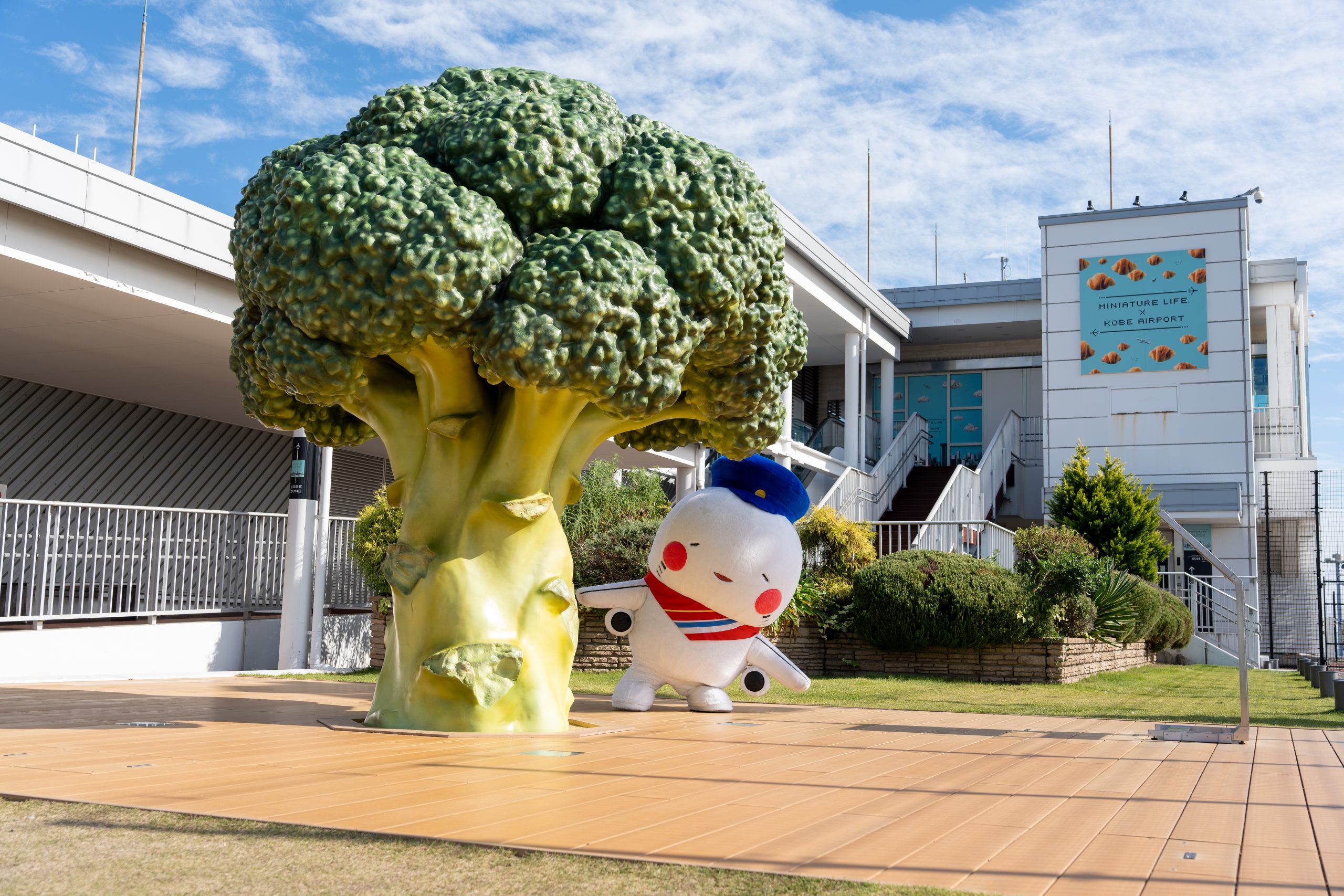
A permanent exhibition by a miniature artist, Tatsuya Tanaka, MINIATURE LIFE × KOBE AIRPORT is a popular complementary facility. One of his works is a large broccoli that is exhibited outside, and many people enjoy taking pictures.
Organizing events at Kobe Airport as formulation of the sense of connection
―― Please tell us about events and activities that connect Kobe Airport and its visitors
For large local events such as Kobe Festival, KOBE AUTUMN FESTIVAL or Kobe Marathon EXPO, we run our booth as Airport.
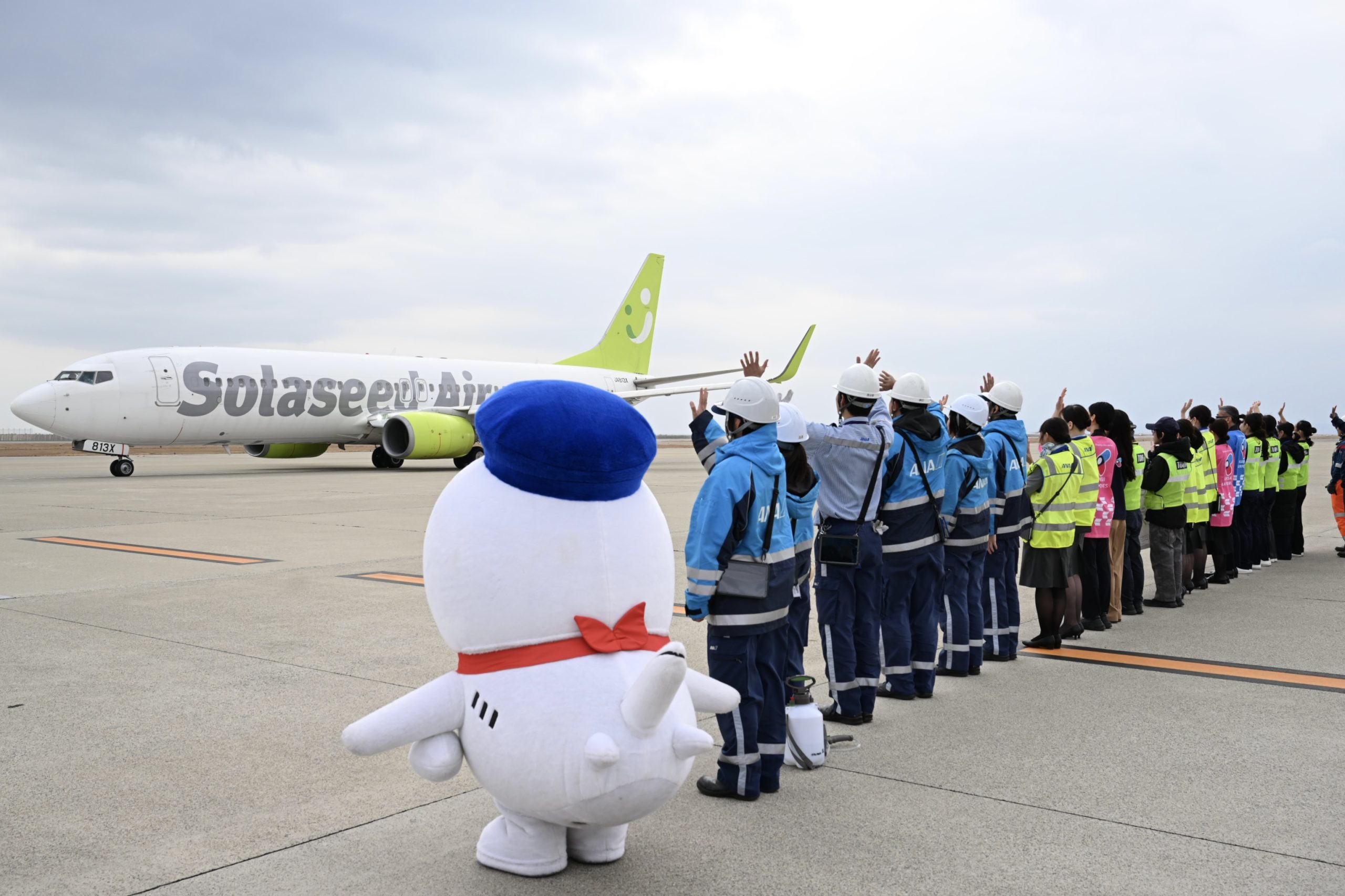
On February 16, which is our anniversary, employees at airlines and the airport see passengers off to express gratitude. I think it is a rare event in Japan where all airline companies at the airport see people off using the same sign.
―Is there any special event for you among what you have held?
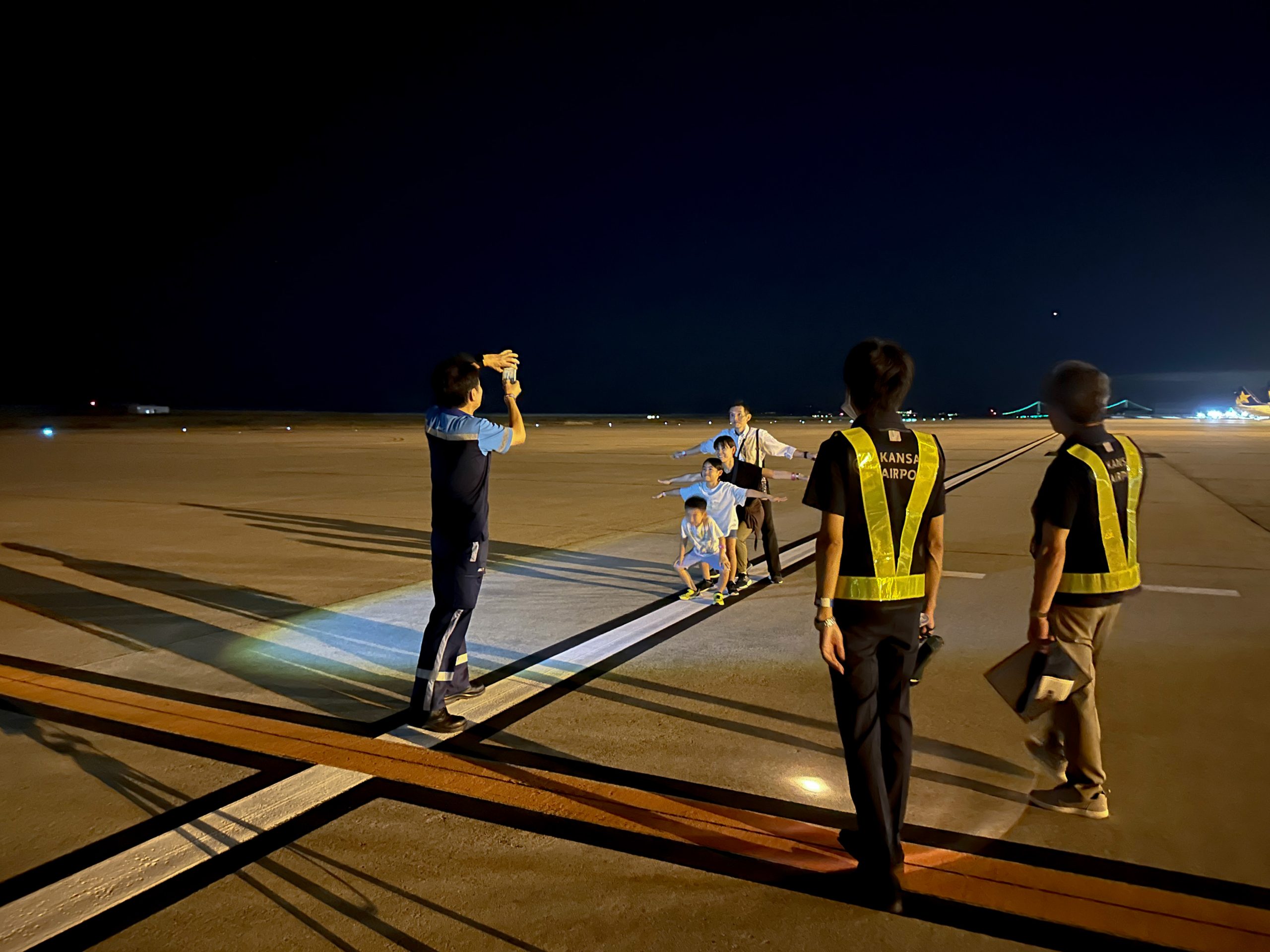
It is the ‘Runway Night Walk Tour’ which we hold every summer. People of a wide range of ages liked it because they could see parking aprons or runways at night, which you usually cannot see.
This is an event that needed cooperation from many departments to ensure that visitors are safe and comfortable. I think it came out as an event where you could see connections inside and outside the airport, with explanations from actual air traffic controllers and guides of starry sky by a planetarium facility nearby.
Gratitude for 20 years. Events to connect with people in community.
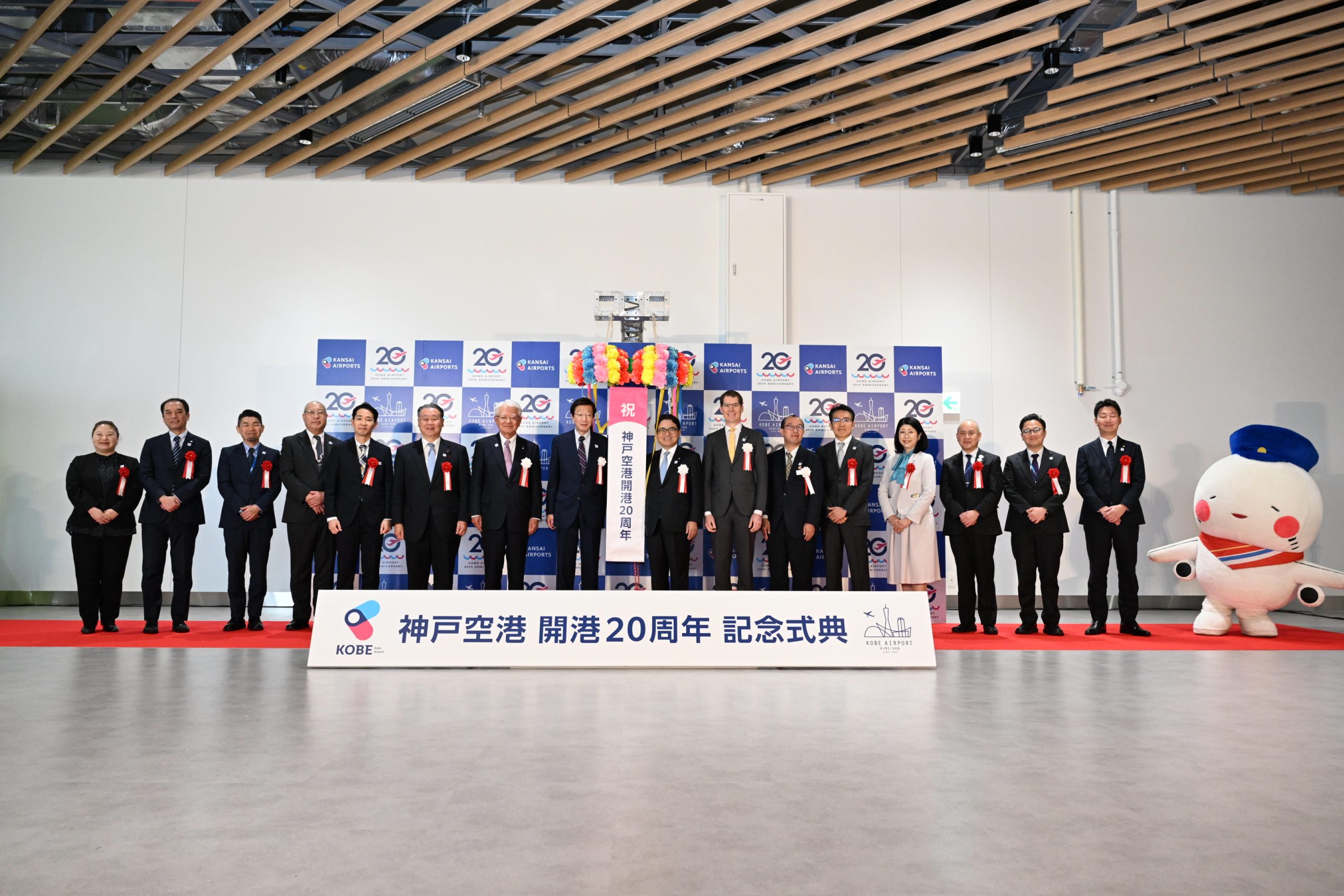
―― What did you do at 20th anniversary event of the airport?
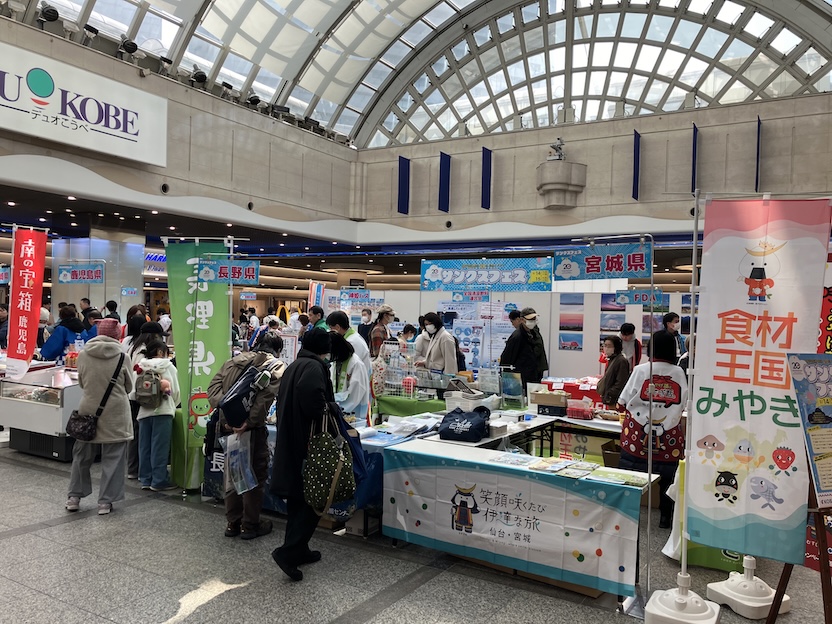
Every year in February, we hold anniversary event of the airport at commercial facilities in Kobe. This year, since it is a milestone of 20 years, we organized photo exhibitions of history of the airport and distributed souvenirs, in addition to usual events that we have every year.
――What was the concept of the event?
We tried to express gratitude to those who used and supported the airport, as well as our wish for their continuous support. Through the event where I could meet local people and those who are involved in airport operations, I again strongly felt my wish to continue to interact with Kobe in the future.
3Airports unite to expand Kansai’s sky
―― What possibility do you think Terminal 2 and international charter flights have, which started operations in 2025?
After international charter flights started operations, there are more visitors from abroad coming in and the airport has more of international atmosphere. The airport has more facilities to accept them, such as signages in multiple languages.
Terminal 2 has a compact sized design, and good thing about it is that visitors can get around there for their first visit and can smoothly get on and off airplanes.
―― Please tell us about your outlook for the future of the airport.
I would like to keep our efforts to have events that everyone can be excited about, focusing on Kobe Airport’s charms for people.
Kobe airport is the ‘eastern entrance’ for Setouchi region, such as Nishi-Harima including Himeji, Awaji Island or Shikoku. It can provide transportation from Kobe to the west, including an 18-minute-long ride to Sannomiya and buses to go to Awaji Island or Shikoku, but that is not well known yet.
I would like more people to know these convenient aspects and energize Kansai region.
Share this article




Related Articles


Behind our efforts to aim for greater heights and shape the future are great efforts and wishes of a lot of people supporting the airports.
In “Fly High,” we show you the passion and future vision of people involved with the airports with diverse stories of people working at the airports, those who grew up with the airports, those who love airplanes.